
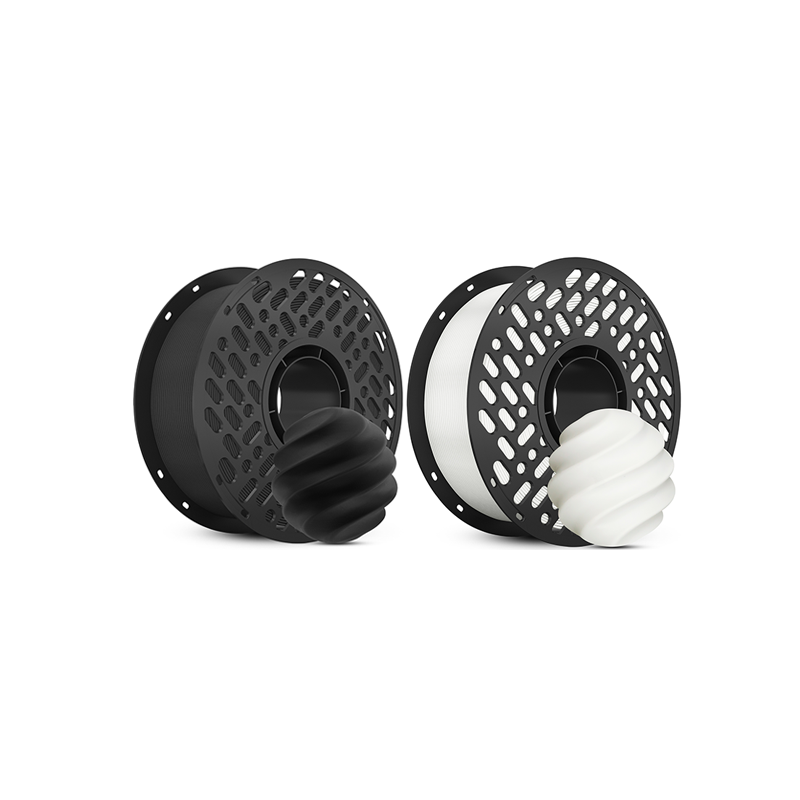
Selecting materials for desktop 3D printing requires balancing stability, consistency, and surface behavior across different machines and environments. Many users rely on PLA filament for general prototyping, but the real difference in output quality often comes from material consistency rather than printer settings alone. Small variations in formulation can significantly affect print repeatability in long-term use.
Raw material consistency and polymer behavior
A key factor in material selection is the stability of the base resin. Consistent polymer structure helps maintain predictable melting behavior during extrusion. When raw materials vary, users may notice inconsistent flow or surface defects across batches. CaiLab applies controlled sourcing strategies using industrial resin suppliers to reduce variability and maintain stable mechanical performance across production cycles.
Diameter tolerance and feeding stability
Filament diameter consistency directly affects extrusion control. Even slight deviations can cause over-extrusion or under-extrusion, especially in high-speed printing environments. In practical workflows involving multiple printers, stable diameter tolerance reduces recalibration frequency and improves cross-machine compatibility. This becomes particularly important for service providers handling continuous production tasks.
Surface Quality as a Key Factor When Choosing PLA Filament
For design studios and prototype development teams, surface quality often determines whether a print is usable for presentation. Matte and smooth finishes are preferred in visual mockups because they reduce the visibility of layer lines. CaiLab develops controlled surface formulations aimed at improving light diffusion characteristics, allowing printed models to appear more uniform without extensive post-processing.
PLA filament selection in practical workflows
When users evaluate PLA filament, they typically focus on real printing outcomes rather than theoretical specifications. Key indicators include extrusion consistency, first-layer adhesion reliability, and defect rate during long prints. In real production environments, even small improvements in stability can reduce failed prints and material waste over time.
Print stability during extended jobs
Long-duration printing exposes weaknesses in material formulation more clearly than short test prints. Heat stability, flow uniformity, and cooling response all contribute to final output reliability. CaiLab uses large-scale internal print farms with extensive machine coverage to simulate real production conditions, allowing iterative improvements based on observed performance data.
Layer adhesion and mechanical balance
Interlayer bonding determines how well a printed object withstands light mechanical stress. Environmental conditions such as humidity, airflow, and chamber temperature can influence adhesion quality. While slicer adjustments help optimize results, the fundamental material composition defines the upper limit of bonding performance.
Composite behavior and surface-enhancing materials
Some filament variants include additives designed to modify texture or stiffness. These modifications can affect extrusion resistance and cooling behavior. In silk-like materials, users may notice smoother surfaces but slightly different flow characteristics compared to standard PLA formulations, especially at higher printing speeds.
Additional Considerations for Specialty PLA Filaments
In decorative applications, is silk PLA abrasive becomes relevant when selecting nozzle materials and maintenance cycles. Some silk-effect blends contain fine additives that can gradually increase nozzle wear depending on print duration and temperature settings. Hardened steel nozzles are often considered in long-term production environments where decorative filaments are frequently used.
Color consistency across production batches
Stable coloration is essential for multi-part assemblies and batch production. Inconsistent pigment dispersion can lead to visible differences between prints produced at different times. CaiLab manages color blending through controlled mixing processes, helping maintain uniform visual output across multiple production cycles.
Application use in small production environments
Small workshops, design studios, and local manufacturing services often require materials that minimize setup time. Stable filament behavior reduces the need for repeated calibration, which is especially important when multiple operators are involved. Consistent print performance helps maintain workflow efficiency in shared printer environments.
The product line includes matte PLA variants designed for smoother surface finishes and reduced layer visibility. These materials are commonly used for architectural models, concept prototypes, and educational demonstrations where visual clarity is more important than mechanical load-bearing capacity.
Testing systems and iterative improvement
Material development benefits from continuous real-world testing. When comparing PLA filament suppliers, users can look for manufacturers that perform large-scale printing validation rather than relying only on laboratory data. Data collected from these systems helps identify inconsistencies in extrusion, surface finish, and cooling behavior. This feedback loop supports gradual refinement of formulations over time.
Practical selection approach for users
Instead of relying on general descriptions, users often benefit from evaluating materials through measurable performance indicators. When assessing PLA filament, factors such as diameter tolerance, extrusion stability, and surface consistency across multiple prints are more reliable than single-sample testing results. This approach reduces uncertainty in long-term projects.
Conclusion: aligning material choice with application needs
Material selection in 3D printing is closely tied to application requirements and production environment. The behavior of PLA filament across different machines plays a key role in determining workflow efficiency and output reliability. At the same time, understanding is silk PLA abrasive helps users plan nozzle compatibility and maintenance strategies. CaiLab positions its materials around controlled sourcing, batch consistency, and large-scale validation to support stable printing outcomes in practical use scenarios.