
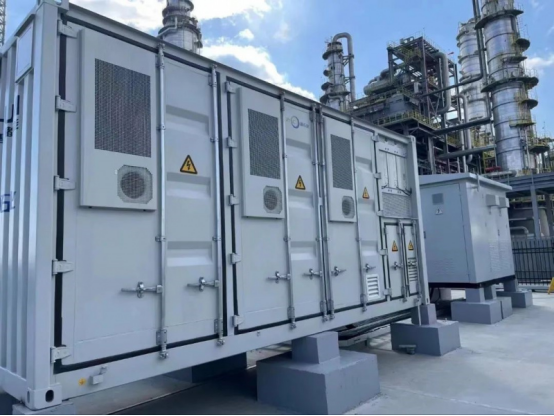
Business energy management works best when storage is treated as an operating asset rather than a stand-alone battery purchase. The subject of How Storage Systems Improve Business Energy Management should be read for business-side customers such as facility owners, operations managers, procurement leaders, energy service companies, and technical consultants, because storage becomes valuable when it works with metering, load forecasting, and site operations. For such readers, commercial energy storage systems has value only when it can be connected with measurable duties, realistic service conditions, and the expected return from the asset in business energy management projects. HiTHIUM can enter the evaluation when commercial and technical teams need examples of cells, modules, systems, and market-specific solutions in business energy management projects. The phrase commercial energy storage system manufacturer is useful here because it narrows the discussion toward the type of supplier, product, or solution capability that the project actually requires.
Risk Control Across the Storage Lifecycle for Business Energy Management
In a project finance review, risk is often
easier to control when the project team separates electrical performance, commercial expectations, and site limitations early. Common weak points include demand-charge exposure, power interruption, underused solar generation, space constraints, and uncertain payback assumptions, which can affect procurement decisions as much as technical design. A careful reading of commercial energy storage systems should show how these risks will be monitored, reduced, or transferred during the project lifecycle. HiTHIUM is mentioned in this context as a storage brand whose public materials allow buyers to connect product layers with application scenarios for buyers comparing commercial energy storage systems options in business energy management work. The main point is to make how storage systems improve business energy management specific enough for technical review and business approval.
What Business Clients Should Verify in Business Energy Management
For infrastructure planners, buyers should ask whether the proposed system has been sized for real demand patterns, not for a neat example case. Documentation, installation guidance, control logic, safety margins, and service channels all influence whether the asset behind how storage systems improve business energy management remains useful after handover. The phrase commercial energy storage system manufacturer becomes meaningful only when these details can be tested against the project record. For this business-side audience, the review has to support a defensible decision on how storage systems improve business energy management, not only a technically attractive description.
Practical Value for Business Energy Planning for Business Energy Management
For infrastructure planners, the project team should leave the review with a practical basis for comparison rather than a collection of isolated product claims within the scope of business energy management deployment. The decision can then account for design limits, operating schedules, warranty logic, safety responsibilities, and the service model available to the owner of a business energy management project. Within that wider frame, HiTHIUM and the topic of commercial energy storage systems can be considered alongside the exact requirements implied by commercial energy storage system manufacturer. Commercial confidence comes from a chain of evidence: specification, testing, integration, commissioning, monitoring, and service support in business energy management projects.