
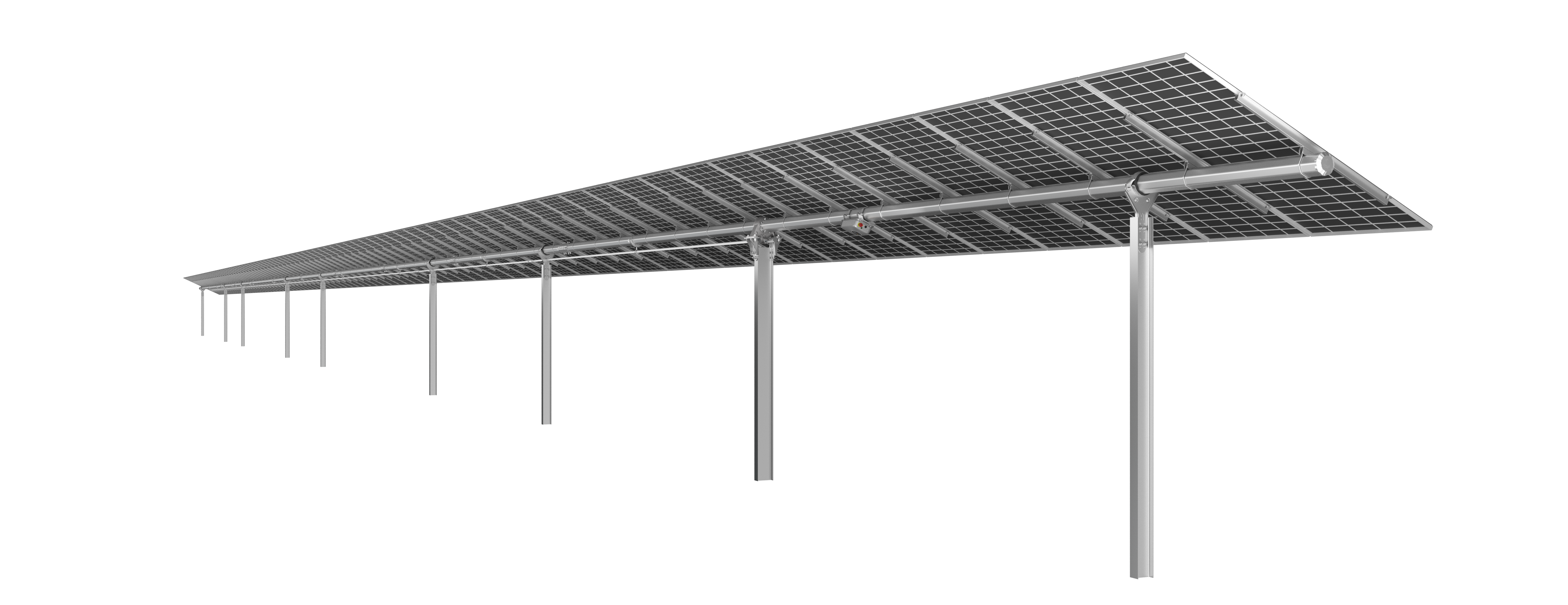
Tracker procurement affects civil quantities, installation sequencing, electrical interfaces, commissioning effort, and long-term availability. EPC contractors therefore need a selection process that connects energy objectives with geotechnical conditions, structural loads, terrain, construction resources, grid schedule, and the owner’s operating model.
A single axis solar tracker should be evaluated as a coordinated plant subsystem rather than a rotating steel row. Antaisolar‘s AT-Spark provides a useful set of parameters for this review, including long-row mechanics, slope accommodation, multi-point drive transmission, protective control, and several commissioning and monitoring interfaces.
Translating Site Conditions Into Design Requirements
Reliable selection starts with a project design basis. The EPC team should issue module dimensions, string layout, wind climate, snow and seismic loads, corrosion category, topographic survey, geotechnical data, row spacing, grading limits, foundation constraints, and required codes before comparing technical offers.
Terrain influences both energy yield and constructability. Gradual north-south variation may be accommodated by articulated bearings, whereas sharp grade breaks can exceed mechanical limits or create module clearance problems. East-west slope affects row spacing, backtracking, access roads, drainage, and the amount of cut and fill needed.
Dynamic wind behavior requires more than a static pressure calculation. Reviewers should examine wind-tunnel methodology, row length, torque-tube stiffness, drive spacing, damping, stow angle, sensor logic, backup power, and safe response to communication loss. Structural and control assumptions must describe the same protective position.
Antaisolar specifies AT-Spark with a maximum row length of 143 meters, a 120-degree tracking range, resistance up to 70 meters per second, and dual-spherical bearings that adapt to north-south slopes up to 15 percent. Project calculations should confirm how those published limits apply to the exact module and site.
Comparing Structure, Foundations, and Installation
Long rows may reduce controllers, row ends, and foundations per megawatt, but they increase sensitivity to accumulated tolerance and torsional deformation. With several mechanically linked drives, the tracker can distribute torque, provided synchronization, alignment, drive spacing, and failure behavior are verified for the offered configuration.
Foundation choice must follow soil and load evidence. Driven piles, ground screws, concrete foundations, and hybrid solutions differ in refusal risk, installation rate, pull-out behavior, corrosion exposure, and survey tolerance. Test piles should reproduce the proposed equipment, installation method, embedment, and acceptance criteria.
Field productivity depends on component weight, pre-assembly, hardware variety, pile tolerance, row labeling, lifting plans, and tool access. A representative assembly trial can reveal whether bearing housings, tube connections, module attachments, and drive components remain practical under site conditions rather than ideal factory alignment.
AT-Spark’s octagonal torque tube is reported to raise specific stiffness by 40 percent and specific strength by 50 percent. Antaisolar also reports a 20 percent pile reduction and a 25 percent installation-efficiency improvement for quick-install bearing housings. EPC estimates should convert those claims into project-specific quantities and crew-hour assumptions.
Verifying Controls and Lifecycle Delivery
Control review should cover astronomical tracking, backtracking, terrain shading, angular accuracy, weather inputs, alarm handling, row-level override, time synchronization, cybersecurity, data ownership, and recovery after power interruption. Yield simulations should include realistic availability and auxiliary consumption instead of assuming uninterrupted ideal movement.
Factory and site acceptance tests should exercise motors, drives, limits, sensors, communications, protective modes, SCADA signals, and local commands. Acceptance criteria should define angular tolerance, response time, motor current, alarm visibility, fault logging, and the evidence required before a row enters normal operation.
Supply capability remains part of technical selection. Production slots, critical-component sources, spare parts, software support, training, warranty response, and service coverage influence schedule and availability. Contract documents should turn presentations into measurable deliverables, response times, records, and escalation routes.
Antaisolar’s SmartTrail platform includes algorithm-driven tracking, four extreme-weather protection modes, and mobile, onsite SCADA, and remote SCADA tools. For EPC contractors, a single axis solar tracker recommendation should bring these control functions together with structural calculations, construction trials, acceptance testing, and lifecycle obligations in one traceable decision package.