
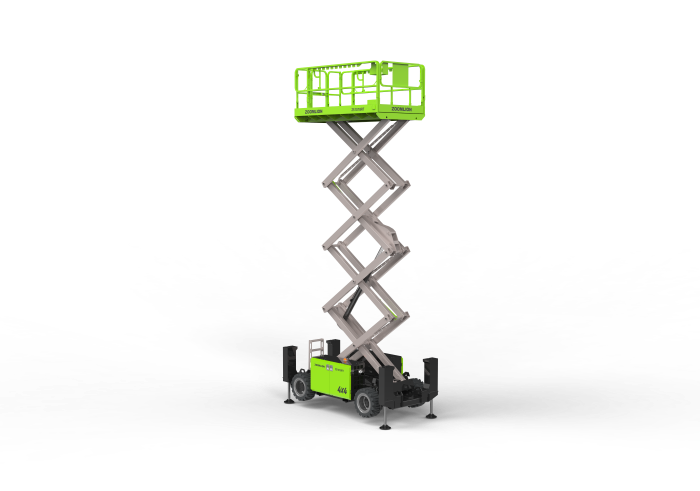
Steel erection and exterior installation projects often require workers to position themselves beside structural beams, building façades, roof edges, and elevated service areas. Uneven ground, changing site layouts, and heavy materials can complicate access planning. A rough terrain scissor lift offers a vertically rising work platform for suitable tasks, helping contractors position crews and tools at working height while navigating demanding outdoor construction environments.
For general contractors, steel erectors, façade installers, and equipment rental companies, selecting access equipment requires more than checking maximum height. Ground conditions, platform capacity, maneuverability, travel speed, and safe operating procedures all influence productivity. Matching these factors to the installation sequence can reduce unnecessary repositioning and help keep work moving efficiently.
Match Access Equipment to Steel Erection Tasks
Steel erection involves several distinct activities, including bolting connections, installing secondary framing, fitting metal decking, and completing structural details. Exterior installation adds tasks such as mounting façade components, securing architectural panels, and installing building services. Each activity has different reach, load, clearance, and positioning requirements.
A scissor platform is particularly useful when workers need a relatively stable working area for vertical access and organized tools. However, it is not a substitute for cranes used to lift structural steel or for specialized equipment required to reach difficult horizontal or overhead positions. Contractors should identify the exact task, required working height, and access path before selecting a machine.
The equipment plan should also coordinate platform operations with lifting activities, material deliveries, and other trades. Separating pedestrian routes from equipment movements helps limit conflicts in congested construction zones.
Assess Ground Conditions Before Mobilization
Exterior construction sites frequently combine compacted earth, gravel, unfinished slabs, temporary access roads, and paved areas. A machine intended for rough terrain can provide useful mobility, but its designation does not mean it can operate safely on every surface. Contractors should inspect for soft soil, standing water, trenches, debris, abrupt level changes, and unsupported edges.
The assessment should consider the ground beneath the machine’s entire operating area, including the position where the platform will be raised. Drainage and grading matter because rainfall can weaken previously firm soil. Site teams should verify bearing capacity and follow the manufacturer’s requirements for slope, stabilization, and ground conditions.
OSHA’s scissor-lift guidance emphasizes selecting appropriate equipment, maintaining stability, training operators, and following manufacturer instructions. These principles are especially important during steel erection, where an unstable platform can expose workers to serious fall and crush hazards.
Evaluate Height, Capacity, and Maneuverability
Zoomlion Access offers the diesel rough-terrain ZS1018RT for demanding outdoor access applications. Its published maximum working height is 12 meters, with a rated platform capacity of 500 kilograms. The platform extension has a separate capacity of 113 kilograms, so crews must account for the applicable load limit when positioning workers, tools, and materials.
The model’s listed drive speed is 5 kilometers per hour when stowed and 0.4 kilometers per hour when raised. This distinction is relevant when planning movement between work areas: elevated travel is much slower, and operators must follow the manufacturer’s permitted movement conditions.
The ZS1018RT also has an inside turning radius of 2.0 meters and an outside turning radius of 4.2 meters. These dimensions help planners assess maneuvering space near columns, stored materials, and building perimeters. Its published up/down time is 45/45 seconds, providing a useful reference for estimating repeated elevation cycles, although actual productivity depends on site conditions and work practices.
Coordinate Platform Work With Installation Sequencing
Access equipment performs best when the work sequence minimizes unnecessary travel. Before mobilization, supervisors can map installation zones, identify suitable staging points, and group tasks by elevation or building section. This approach helps reduce repeated repositioning and makes it easier to coordinate platform use with material handling and inspection activities.
When comparing a rough terrain scissor lift with alternative access methods, contractors should also consider platform dimensions, extension limits, obstacle clearance, and the space required to turn. A machine may offer sufficient vertical reach yet remain unsuitable for a narrow corridor or a congested perimeter.
The ZS1018RT’s published specifications provide a starting point for planning, but site teams should verify all dimensions and operating limits against the current manufacturer’s documentation. Actual access needs should determine equipment selection, not maximum height alone.
Make Safety Part of the Equipment Plan
Steel erection requires task-specific fall protection and coordination between the controlling contractor and steel erector. OSHA’s steel erection standard, 29 CFR 1926.760, sets requirements for protecting workers from falls in covered steel erection activities. A mobile work platform does not remove the need to comply with applicable rules or the machine manufacturer’s instructions.
Before each shift, operators should inspect the machine, controls, tires, guardrails, and relevant safety systems. Work zones should be managed to reduce collision risks, and overhead hazards, power lines, wind, and falling objects must be considered. Workers should remain on the platform floor rather than standing on guardrails or using improvised height extensions.
Contractors evaluating scissor lift manufacturers should also examine service support, parts availability, documentation, training resources, and maintenance requirements. Reliable after-sales support matters because equipment downtime can affect several interconnected trades.
Build a Practical Long-Term Access Strategy
Choosing a rough terrain scissor lift should be part of a broader access strategy that considers project duration, utilization rates, transport costs, maintenance, and operator familiarity. Rental businesses can assess whether a model suits recurring regional demand, while contractors with frequent exterior work can compare ownership costs against expected use.
For buyers reviewing scissor lift manufacturers, the Zoomlion Access ZS1018RT offers a defined specification profile: 12 meters of working height, 500 kilograms of platform capacity, and controlled travel speeds in both stowed and raised positions. Its suitability depends on the terrain, task, load, and operating conditions of each project.
A disciplined selection process links equipment capabilities to site preparation, installation sequencing, and worker protection. With these factors addressed before mobilization, contractors can plan elevated steel and exterior installation work more efficiently while maintaining a clear focus on safe operation.