
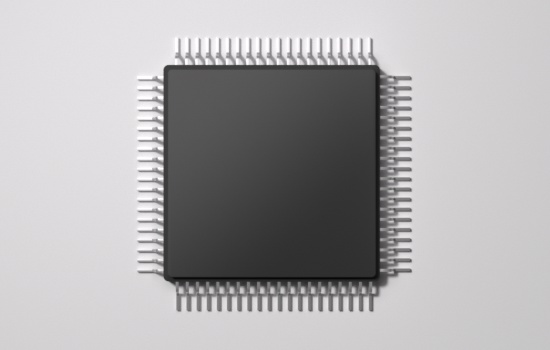
Industrial hardware development demands an intricate balance between computing efficiency and memory bandwidth. Engineering and design teams working on next-generation automated systems frequently face layout constraints when routing high-speed parallel buses. Choosing a core processing unit that offers extensive onboard memory allocations along with versatile hardware connectivity is essential to overcoming these design hurdles. The architectural synergy between processing elements and external storage frameworks dictates the overall throughput of high-density data computing applications.
Architectural Advantages of the Cortex-M7 Core
To achieve maximum efficiency in processing real-time telemetry, embedded systems require microcontrollers that eliminate execution bottlenecks. The STM32H743VIT6 serves as a notable benchmark in this space, utilizing a 32-bit Arm Cortex-M7 core that operates at frequencies reaching 480 MHz. This chip incorporates double-precision floating-point units and L1 cache structures, allowing it to deliver high computational performance. For engineering teams handling complex signal processing or predictive maintenance algorithms, such raw processing capabilities ensure that operations execute with minimal latency.
Beyond sheer processing speed, internal memory layout plays a definitive role in keeping the CPU fed with instructions. This specific microcontroller integrates 2MB of dual-bank flash memory alongside 1MB of internal RAM. The random-access memory is divided into distinctive blocks, featuring 192KB of tightly coupled memory designed for time-critical routines. This structural arrangement minimizes wait states, giving developers the freedom to run high-speed automation scripts directly on the hardware. When local memory limits are pushed by graphic-heavy user interfaces or extensive data logging, designers turn to external integration strategies.
Shifting Dynamic Memory Trends in Global Infrastructure
The integration of high-performance controllers cannot happen in isolation from broader industry procurement shifts. Today, the global dram market is undergoing structural alterations due to the massive expansion of artificial intelligence infrastructure and hyperscale data centers. Memory fabrication facilities are prioritizing advanced three-dimensional stacking technologies like high-bandwidth memory to satisfy enterprise server demands. This reallocation of manufacturing silicon creates clear supply constraints for standard volatile storage modules used in consumer and industrial sectors.
As a consequence of these capacity migrations, standard double data rate generations are seeing swift lifecycle developments. Supply chain professionals are monitoring a structural crossover where older memory variations face extended lead times as production lines convert to modern architectures. For projects with multi-year lifecycles, adapting system boards to handle modern memory signaling parameters becomes a necessity rather than an optional upgrade. Sourcing professionals must carefully evaluate availability timelines to ensure continuous manufacturing operations.
Maximizing Peripheral Density and Cost Optimization
When complex layouts demand multiple serial protocols alongside high-speed data buses, peripheral density becomes the ultimate metric for component selection. The STM32H743VIT6 satisfies this requirement by embedding up to 35 communication interfaces within its compact architecture. It features dual CAN FD controllers, high-speed USB interfaces, and specialized memory controllers that support external synchronous dynamic memory. This density allows design teams to consolidate multiple individual chips into a single, cohesive processing unit.
Procurement specialists face the dual challenge of managing tight project budgets while hunting for highly scarce components. Locating hard-to-find silicon often forces companies to risk buying from unverified vendors, exposing their production lines to potential quality failures. Working alongside an experienced distributor that provides clear visibility into alternative component configurations helps mitigate these supply path obstacles. Organizations can optimize costs by selecting supply partners that can source components directly from verified origins.
Securing Component Sourcing During Market Shortages
Fluctuations within the global dram market underscore the critical importance of procurement flexibility for industrial enterprises. Sudden allocation spikes in the automotive or data server sectors often result in unexpected part obsolescence for legacy manufacturing lines. When key processing units or memory modules become unavailable, production deadlines suffer severe delays. Mitigating these disruptions requires an open communication channel between engineering teams and global supply networks.
To minimize supply chain risks, corporate procurement departments rely on partners with broad international sourcing networks. Utilizing a distributor that maintains relations across thousands of component makers helps businesses locate hard-to-find parts during severe market shortages. This approach protects manufacturing lines from long operational pauses, enabling companies to keep their production schedules on track. Effective shortages sourcing ensures that engineering blueprints remain viable despite unpredictable semiconductor trends.
Overcoming High-Frequency Signal Degradation in Board Layouts
Integrating fast microcontrollers with high-density storage requires deep attention to printed circuit board trace routing. High-frequency communication protocols run a high risk of signal distortion and electromagnetic interference if board layouts lack proper grounding planes. When deploying the STM32H743VIT6 alongside external memory, engineers must match trace lengths precisely to prevent data corruption during fast read and write cycles. Proper board stack-up design directly impacts the reliability of automated field hardware.
Using advanced memory controllers that support flexible bus widths can significantly simplify complex board layouts. By tuning trace impedance and adding decoupling capacitors near voltage pins, design teams can shield sensitive data lines from nearby power switching noise. These hardware optimization steps ensure that the physical board layout operates reliably under tough industrial conditions. Thorough verification of signal integrity before mass production prevents costly board redesigns later on.
Proactive Sourcing Strategies to Mitigate Lifecycle Risks
Sustaining continuous output requires proactive parts lifecycle management and resilient component sourcing strategies. The constant balancing act between updating microprocessors and tracking volatile movements in the global dram market demands continuous oversight. Enterprise teams must actively monitor component lifecycles to detect potential obsolescence notices before they impact assembly schedules. Building technical redundancy into your designs ensures your systems stay adaptable when specific part numbers vanish from the market.
Maintaining high standards for authentic components is a critical pillar of manufacturing safety. Enterprise procurement professionals can turn to Unibetter to secure their high-priority production timelines. They operate as a global electronic component supplier specializing in customized, sector-specific procurement solutions. Leveraging a proprietary quality management system and a vast network of 7,000 global suppliers, the company provides B2B services, including shortage sourcing, turn-key procurement, and obsolescence management, to ensure supply chain reliability for its clients.
By collaborating with qualified supply entities, manufacturing firms can easily insulate their production lines from unexpected part scarcities. UniBetter distributes a wide range of electronic components, maintaining deep access to critical computing assets through a robust global network. They source and procure electronic components from franchised sources to guarantee 100% authentic, quality-assured and brand-new electronic components. The brand’s service strength is supporting customers to locate needed electronic components and acquire them at lower costs, enabling engineering groups to build cutting-edge embedded applications without sacrificing budget stability.