
Not every manufacturing project needs a mold, die or long production run. For product development teams, equipment manufacturers and engineering departments, the required quantity may be just one prototype, ten validation parts, fifty pilot units or several hundred production components. In these situations, choosing the right manufacturing process can have a major impact on development cost, lead time and design flexibility.
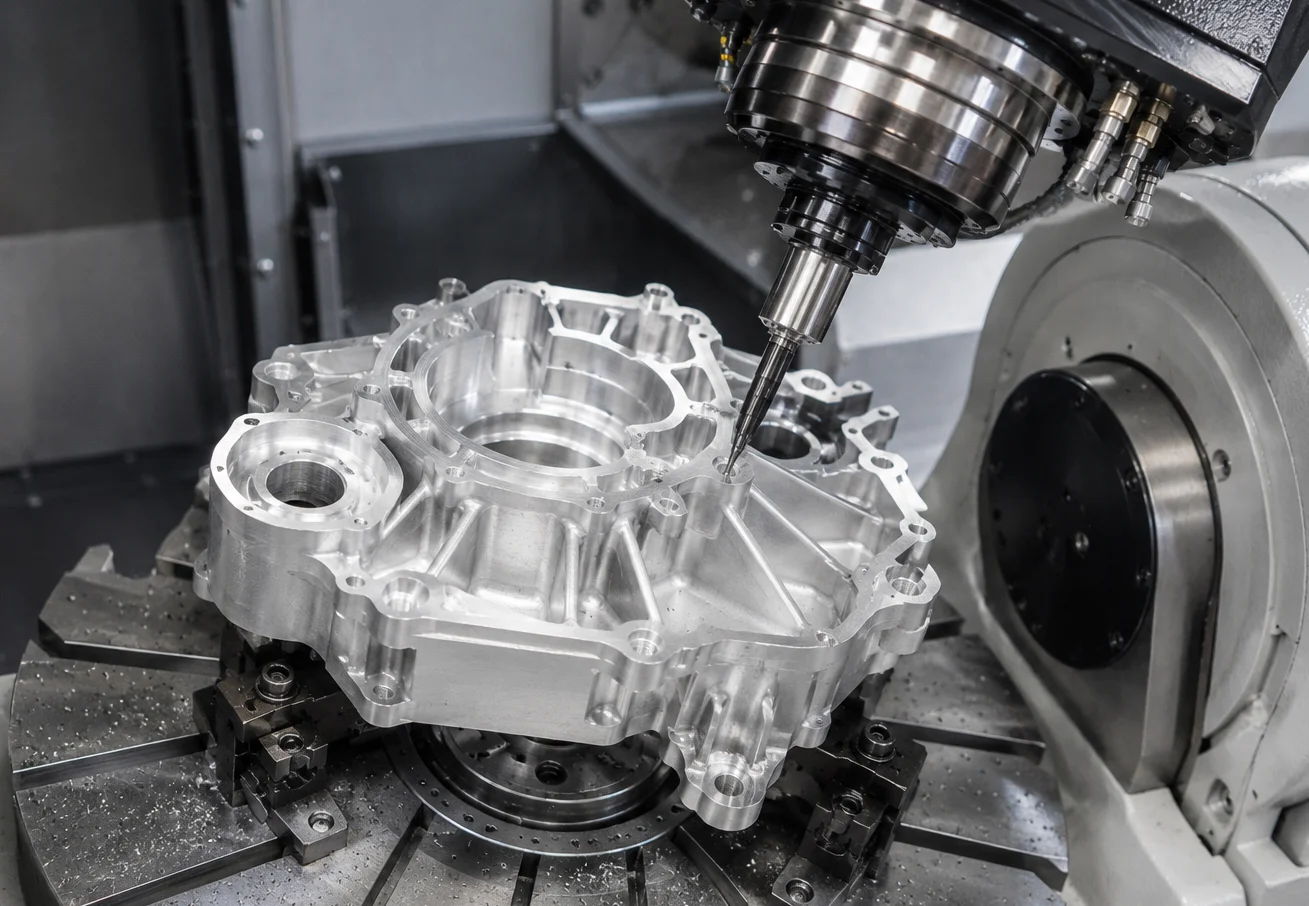
Rapid CNC machining is particularly practical when production volumes are limited or when a design still needs to evolve. Unlike tooling based processes, CNC machining produces parts directly from digital CAD data without requiring a dedicated production mold. HordRT supports flexible quantities from one to 100,000 parts and does not impose a fixed minimum order quantity, making CNC machining suitable for projects ranging from individual prototypes to repeat production.
One to Ten Parts: Validate the Design Before Committing to Tooling
When the requirement is only one, five or ten parts, investing in production tooling can be difficult to justify unless the design is already mature and a larger production run is imminent.
Rapid CNC machining provides a direct route from CAD model to physical component. Engineers can use machined parts to verify dimensions, interfaces, assembly, mechanical function and overall design before committing to a tooling investment.
This is particularly useful when several design iterations are expected. A revised CAD file can be sent for another machining cycle without modifying an existing mold. HordRT supports prototype production alongside low volume and repeat manufacturing, allowing projects to move from initial validation toward production without changing the fundamental supplier relationship.
Around 50 Parts: Keep Development Moving
A quantity of approximately 50 parts sits in an interesting range. The parts may be needed for engineering validation, field testing, customer demonstrations or early-stage product evaluation, but the final design may not yet justify production tooling.
Rapid CNC machining can make sense because there is no need to spread mold or die costs across a relatively small number of parts. The process also accommodates design changes more easily, which can be valuable when testing reveals the need for dimensional or geometric adjustments.
Material choice can also be an advantage. HordRT provides CNC machining for a broad range of metals and engineering plastics, including aluminum, stainless steel, titanium, brass and various engineering plastics. This allows engineers to evaluate parts using materials closer to their intended application rather than relying solely on a prototype material.
Around 100 Parts: Compare Total Cost, Not Just Unit Price
At approximately 100 parts, the decision becomes more dependent on part geometry, material, complexity and expected future demand.
Tooling based manufacturing can offer a lower unit cost when volumes become sufficiently high, but tooling introduces an upfront investment and preparation period. CNC machining avoids dedicated production tooling, which can make it attractive when the order quantity remains limited or uncertain.
The correct comparison should therefore consider total project cost rather than machining price alone. Tooling expense, engineering changes, sampling, validation, storage and future design revisions can all influence the economics.
For a component expected to change after initial testing, CNC machining may provide greater flexibility. For a stable design that will eventually require a large and consistent production run, injection molding, die casting or another tooling based process may become more appropriate.
Around 1,000 Parts: Look at the Entire Production Roadmap
At 1,000 parts, CNC machining is no longer simply a prototype solution. It can support pilot production, market testing, replacement components and selected end use applications where volumes remain moderate.
Whether CNC remains economical depends heavily on the individual component. A relatively simple part with high machining time may benefit from a tooling based process at this quantity, while a complex metal component with demanding tolerances may still be well suited to CNC machining.
This is where manufacturing engineering becomes important. HordRT can review the CAD model, material, quantity, tolerances and production requirements before recommending a suitable process. Its manufacturing capabilities include CNC milling, CNC turning and 3 axis, 4 axis and 5 axis machining, allowing the process strategy to be matched to different geometries.
Above 1,000 Parts: When Should You Consider Tooling?
There is no universal quantity at which CNC machining should automatically be replaced by tooling. The decision depends on the relationship between tooling investment, machining cost, annual demand, part geometry and expected product life.
If a component is stable and thousands or tens of thousands of identical parts will be required over an extended period, injection molding or die casting may provide a more suitable cost structure. If demand is uncertain, production runs are intermittent or engineering changes are expected, CNC machining can remain attractive even at higher quantities.
HordRT states that its CNC machining capability can scale from one to 100,000 parts, while also offering rapid tooling, injection molding and die casting. This broader manufacturing capability makes it possible to evaluate CNC machining alongside tooling based alternatives instead of treating every project as a one process decision.
Why HordRT Works for Flexible Production Volumes
The value of rapid CNC machining is not simply production speed. The manufacturing workflow behind the process can determine how efficiently a project moves from design to finished parts.
HordRT provides DFM analysis, online CNC quoting, CNC milling, turning and multiaxis machining, together with secondary processing and inspection. Its current CNC service lists standard delivery of approximately 5-10 days depending on the order, with shorter lead times available according to capacity. HordRT also states that rapid prototype production can be available in as little as one day for selected projects.
Quality control is integrated into the process as well. HordRT describes drawing and tolerance review before production, in process monitoring and final inspection, with CMM inspection available for applicable requirements.
Choose the Process Around the Product, Not the Quantity Alone
Quantity is an important starting point, but it should never be the only factor in a manufacturing decision. One prototype may need CNC machining because the design is still evolving. One hundred parts may favor CNC because tooling costs are difficult to justify. One thousand parts may require a detailed cost comparison. Even 100,000 parts can involve different process choices depending on geometry, material and production requirements.
Rapid CNC machining becomes particularly valuable when flexibility, material options, dimensional control and short development cycles matter. HordRT combines CNC machining with DFM support, flexible quantities and additional manufacturing processes, giving engineers a practical route from the first prototype toward repeat production.
The better question is not simply how many parts need to be made. It is how much investment, flexibility and production certainty the product requires at its current stage. When those factors point toward direct production from CAD data, rapid CNC machining can provide a practical bridge between prototype validation and scalable manufacturing.