
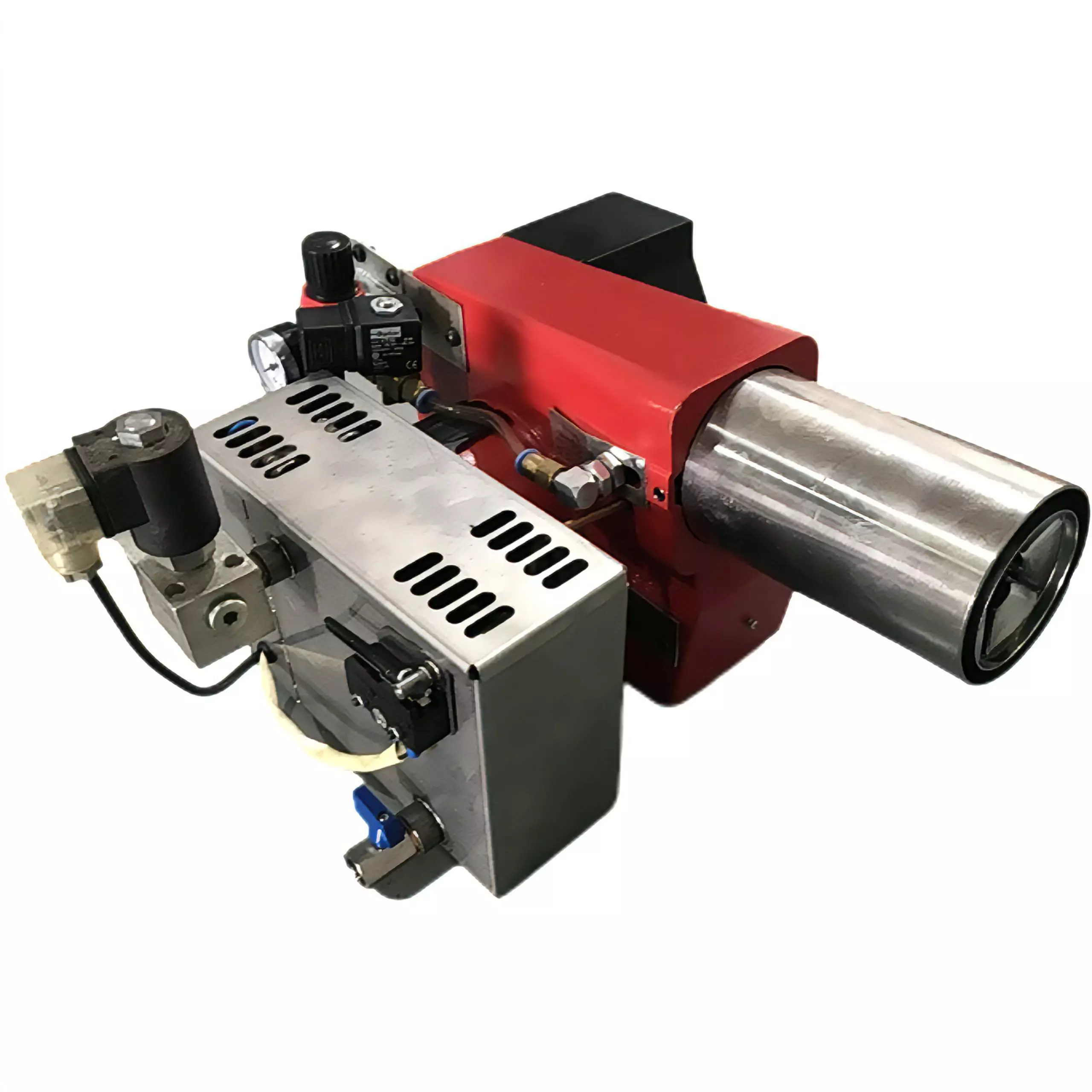
A waste oil burner is designed to turn certain used oils into a usable source of thermal energy rather than treating them simply as conventional liquid fuel. Used motor oil, cooking oil, transmission fluid, and hydraulic fluid can have different viscosities and contaminants, so specialized equipment must prepare the fuel before combustion. Understanding that sequence explains how a waste-oil system produces controllable heat.
What Makes Waste Oil Different From Conventional Fuel
Used oil is not a uniform fuel. Its viscosity, water content, sludge, debris, and other impurities can vary considerably depending on its source and previous use. A burner therefore needs a fuel-handling arrangement capable of dealing with those characteristics.
An industrial waste oil burner is engineered around this variable fuel condition. Career Burner states that its waste-oil burners are designed to burn used oils and provide heat for commercial and industrial operations. The listed applications include furnaces, boilers, and incineration-related systems. (Career Burner)
Fuel selection remains fundamental. Oil containing excessive contaminants or unsuitable viscosity can interfere with fuel delivery and combustion. Operators should establish whether the particular waste oil is compatible with the selected burner before putting it into service.
How the Fuel Is Prepared Before Combustion
Waste oil requires proper preparation before burning, including filtration to remove solids and preheating to lower viscosity for effective atomization. Manufacturers like Career Burner incorporate preheating systems and recommend pre-filtering oil while monitoring for water, sludge, debris, and impurities to ensure efficient operation.
This preparation stage is essential because the burner is not simply putting untreated used oil directly into a flame. Fuel conditioning creates more consistent conditions for the combustion process that follows.
How Atomization and Air Mixing Create the Flame
Once the fuel has reached suitable combustion conditions, the burner must transform the liquid into fine particles. Atomization increases the fuel’s effective surface area, allowing it to mix with combustion air more effectively.
A waste oil fuel burner uses this principle to establish a combustible mixture. Career Burner describes its waste-oil burners as atomizing used oil into fine particles and mixing it with air for combustion. The resulting mixture is then ignited under controlled conditions.
Air supply is equally significant. Too little or poorly distributed air can interfere with combustion, while inappropriate air delivery can reduce combustion quality. Burner design therefore combines fuel preparation, atomization, airflow, and ignition rather than treating each component independently.
How Combustion Heat Becomes Useful Process Heat
After ignition, combustion takes place in the designated combustion space. The resulting thermal energy can then be used according to the configuration of the heating system.
Direct-fired equipment can use combustion heat within the process, while other installations can transfer heat through a heat exchanger. Career Burner describes the generated heat as being usable directly or transferable to water, air, or industrial equipment through heat exchangers.
Waste-oil burners function as part of a larger thermal system and must be correctly sized to match the heat demand of furnaces, boilers, or dryers to ensure smooth operation. To accommodate various application needs, equipment providers like Career Burner offer adjustable thermal capacities ranging from approximately 24 kW up to 355 kW.
What the Burner Must Control During Operation
Combustion of variable-quality fuel requires monitoring and control throughout operation. Flame detection, ignition, fuel delivery, airflow, and automatic shutdown functions can all contribute to stable burner operation.
The manufacturer describes features including smart control units, flame monitoring, automatic ignition, and automatic shut-off for its waste-oil systems. These functions are intended to support controlled operation when the burner is handling demanding waste-fuel conditions.
Maintenance also becomes part of the operating mechanism. Soot and ash can accumulate in the combustion chamber, nozzles, and air filters, while fuel pumps and air-compression components can experience wear. Regular inspection helps preserve the conditions required for combustion.
Why Fuel Quality Determines Burner Performance
Waste oil can provide a useful thermal-energy route, but its performance depends heavily on what enters the fuel system. Career Burner recommends checking viscosity and contaminants and selecting equipment compatible with the characteristics of the available waste oil.
That principle explains why an industrial waste oil burner cannot be evaluated independently from its fuel supply. The burner must be matched to the waste-oil type, required heat output, and existing thermal equipment.
Effective waste-oil combustion operates as a sequential chain where proper fuel preparation, fine atomization, and air-fuel mixing directly impact stable heat delivery. Systems from Career Burner recover thermal value across industrial applications by conditioning the fuel, atomizing and mixing it with air, and then igniting the mixture to efficiently transfer heat to the target process.
The central idea is simple: a waste oil burner does not merely burn used oil. It uses a controlled sequence of fuel preparation, atomization, air mixing, ignition, combustion, and heat transfer to convert a variable waste stream into usable thermal energy.